QRA Awards

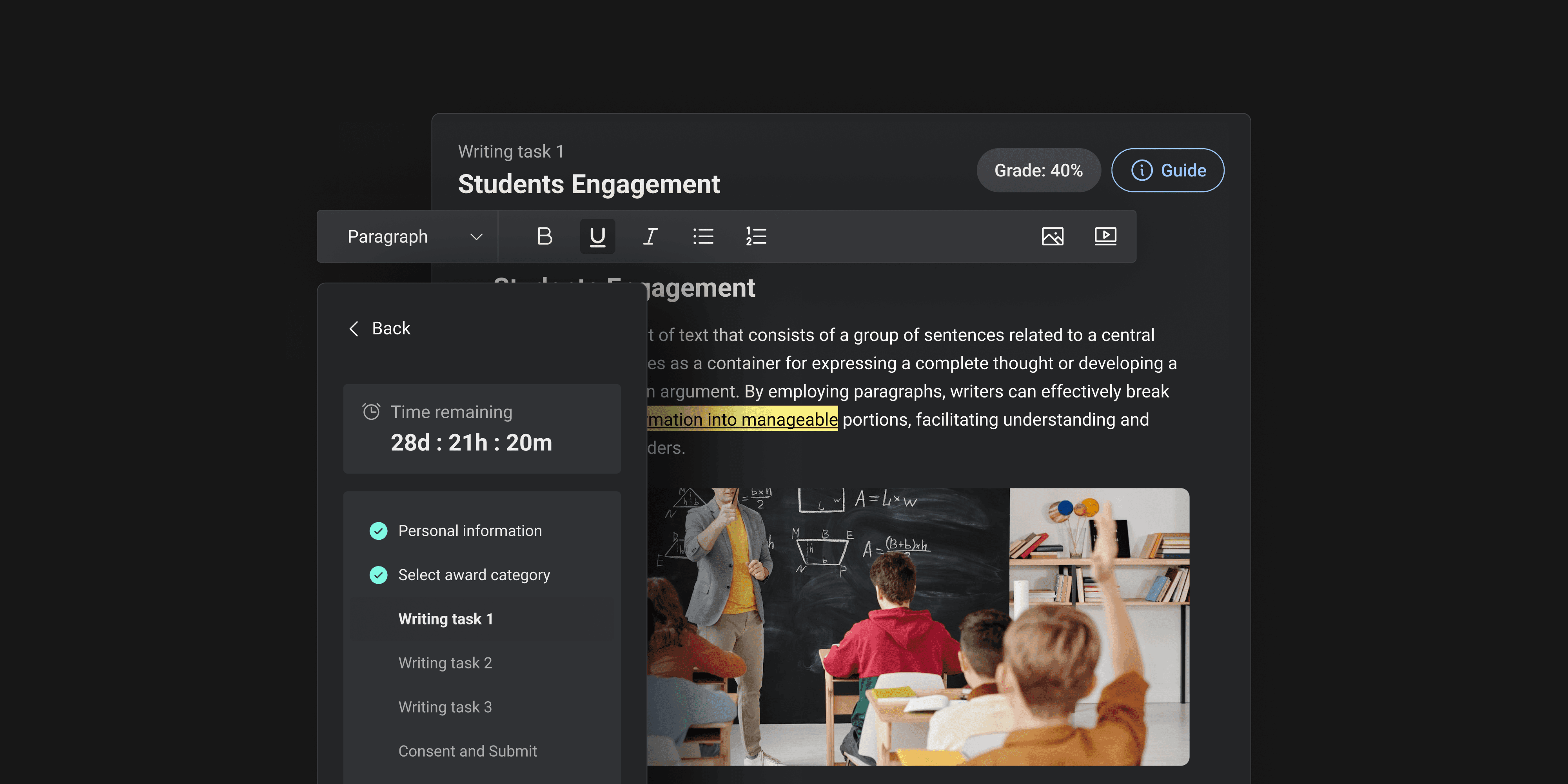
Digital transformation for the most valuable educational awards in Jordan, Queen Rania Awards for Excellence. The primary objective of this project is to transition the existing award process from manual paperwork to a fully digital process, from application to assessment.
Problem
The manual application process is time-consuming for both applicants and assessors, involving very long forms and physical media submissions such as CDs or photos. After submission, assessors review applications, conduct field visits, and then select winners based on the overall evaluation. This process typically takes several months to complete.
- 😢The writing task is nightmare for both applicants and assessors
- 😢The time for announcing the winners is too long
- 😢Attaching media to the application is not convenient
- 😢No transparency for the assessment
The current award process is overly complex, and we are seeking to simplify the application process and reduce the time and efforts spent on assessment.
Award Coordinator
Discovery
We started the discovery with multiple the stakeholder interviews, to understand the award process, the problems to solve, and define the objectives for this transformation. Also we conducted multiple interviews with previous award winners, applicants and people wishing to apply, to deeply understand their problems and pain points in order to solve them.
Main objective
Build a digital platform to streamline the application and assessment process, making it faster, easier and more transparent for both applicants and assessors.
Editing the writing task needs huge efforts, meeting the required word count is challenging, and the long time to announce the winners makes the entire process feel slow and frustrating.
Previous Award Winner
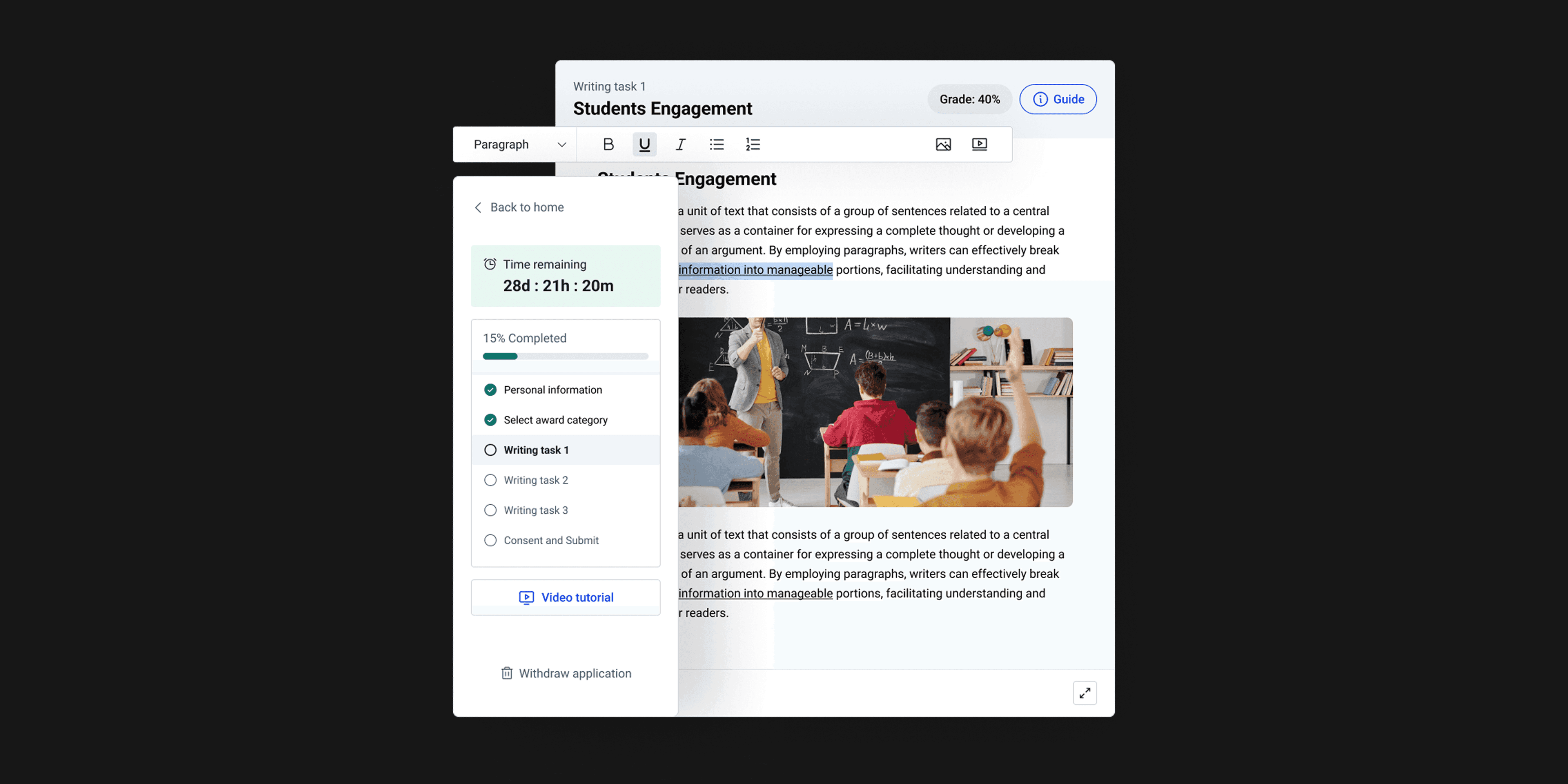
The application form
The application form was key to increasing submissions, so we simplified data entry, added media support, and conducted usability sessions to ensure the application process was easy to use.
Application Assessment
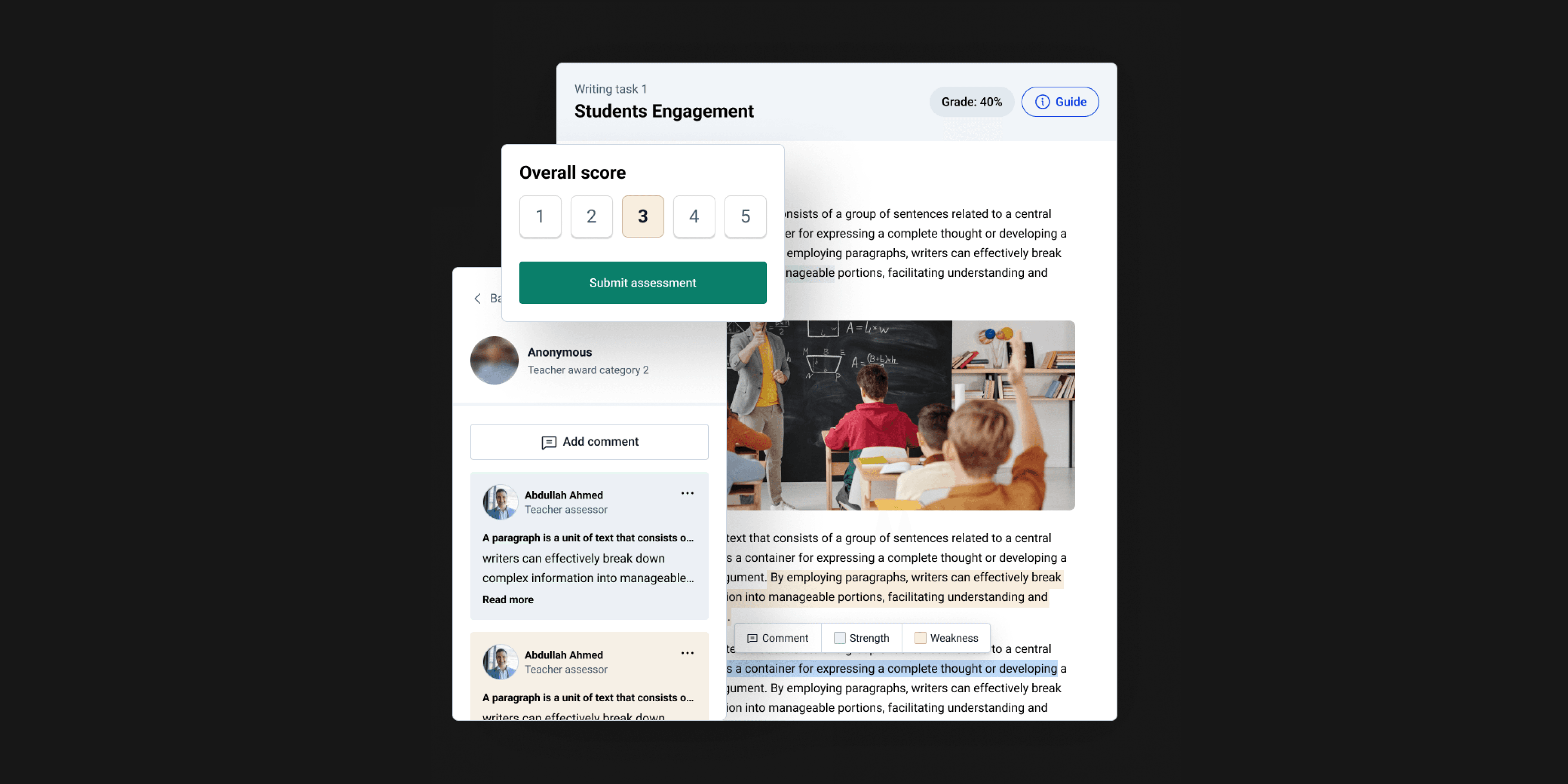
The most challenging part was building an assessment process, especially for long writing tasks. Assessors can highlight strengths and weaknesses, add comments for applicants and other assessors, and provide ratings for each task. This ensures higher transparency for the assessment process.
Task based system
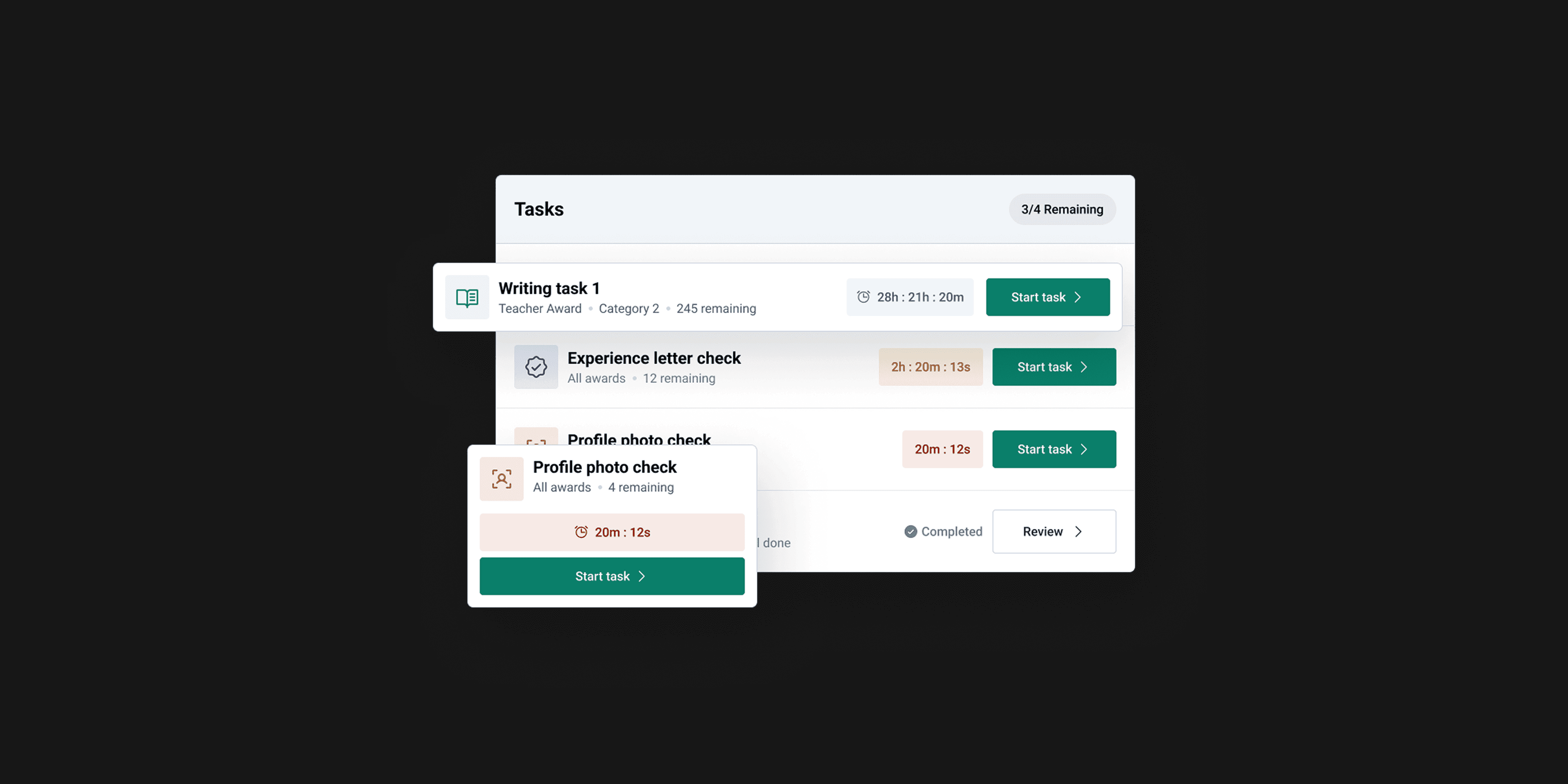
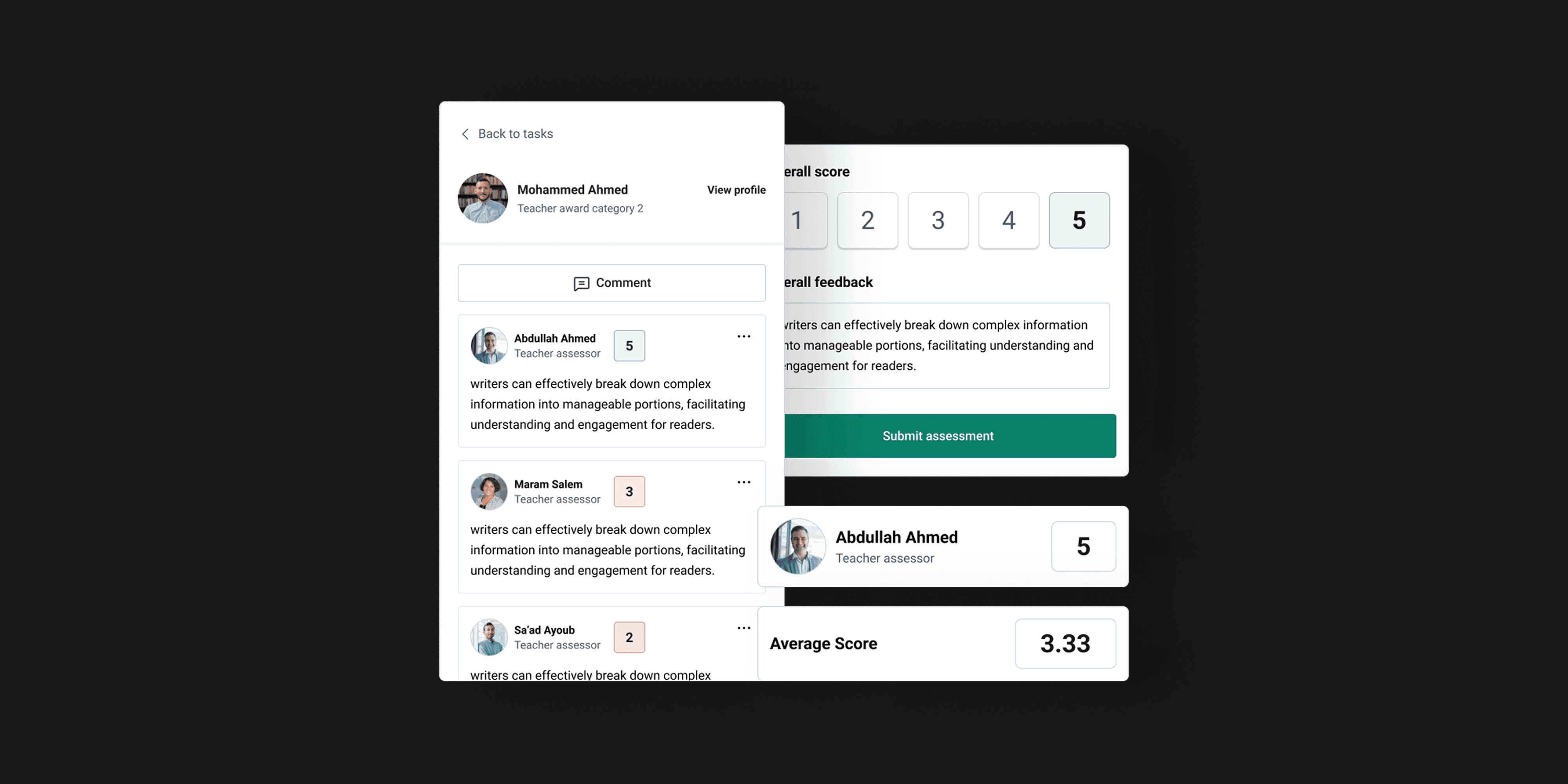
We created a task-based system for assessors, where assessment tasks are distributed evenly among them. Once a task is completed by the first assessor, it is sent to the next for review. Each task is reviewed three times to reduce bias and ensure a fair assessment.
Field Assessment
Assessors use tablets to complete the evaluation, so the system is fully responsive and adapts all variant sizes. Three assessors conduct the assessment simultaneously while observing the applicant in the real work environment.
Impact
- 🚀+2,100 new applicants in the first year
- 🚀Applications grew from ~3,900 to 6,000+ in two years
- 🚀Assessment time reduced from months to weeks
- 🚀Lower operational cost due to faster processing
- 🚀Remote assessments enabled, no on-site presence required
- 🚀Less manual effort for assessors
- 🚀More transparent evaluation process
Read Next
Explore more case studies and projects.